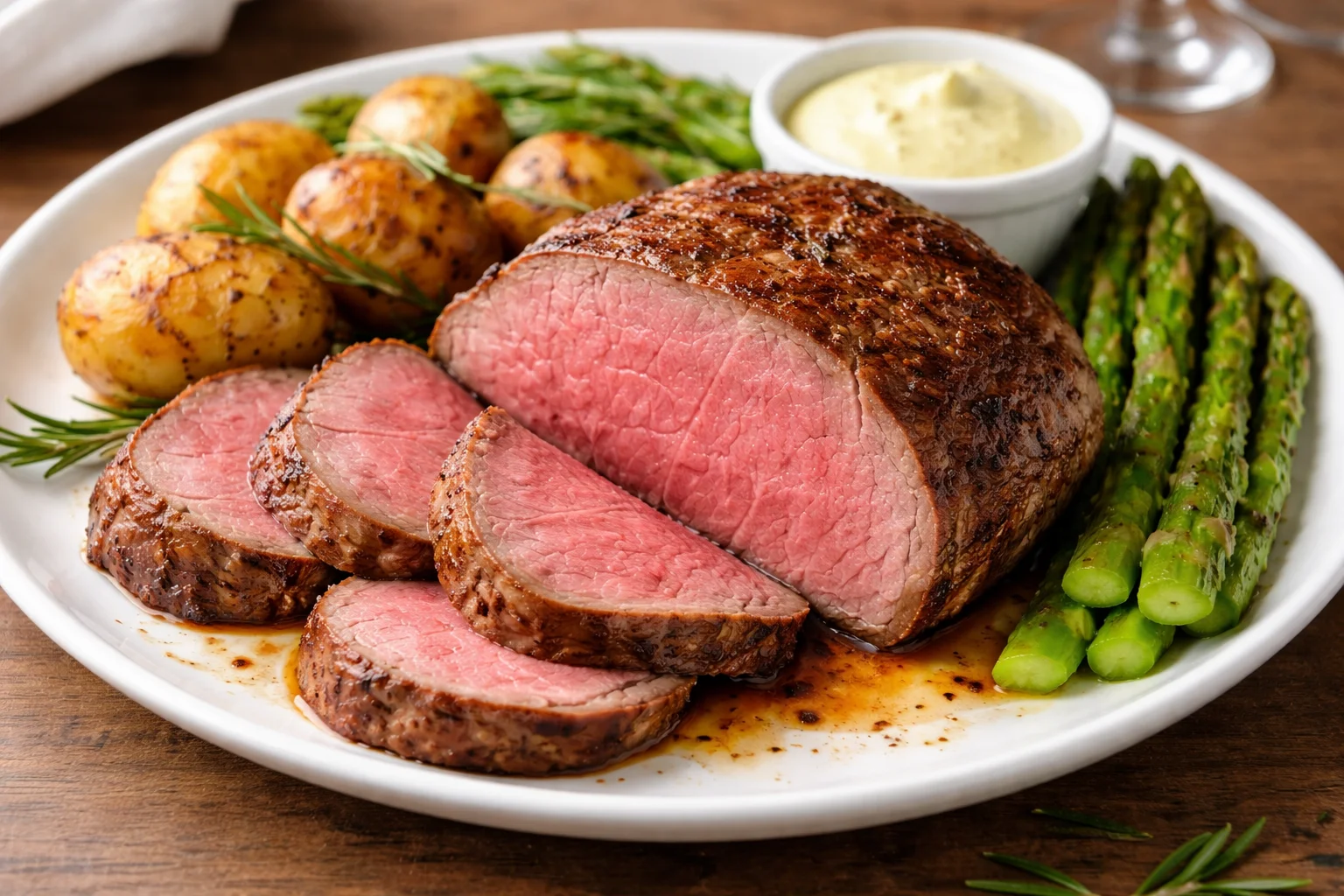
Chateaubriand is one of the most respected and talked-about dishes in classic cuisine. The name carries a sense of elegance, quality, and careful preparation. When people hear chateaubriand, they often think of a thick, perfectly cooked piece of beef served with balance and care. This dish is not about speed or shortcuts. It is about technique, patience, and understanding meat at a deep level.
This article explains chateaubriand in detail. You will learn what it is, where it comes from, how it is prepared, how it tastes, and why it still holds a special place on menus and dining tables around the world.
What Is Chateaubriand
Chateaubriand is a thick cut of beef taken from the center of the tenderloin. The tenderloin is known for being the most tender part of the cow, and the center portion is the best section of it. This is why chateaubriand is often described as extremely soft, smooth in texture, and easy to cut.
Traditionally, chateaubriand is large enough to serve two people. It is not a single thin steak. Instead, it is a thick piece of beef that is cooked as one whole cut and then sliced before serving.
Key characteristics of chateaubriand include:
- Cut from the center of the beef tenderloin
- Very tender texture
- Thick shape, not thin
- Usually served for two people
- Cooked with careful temperature control
Because of these qualities, chateaubriand is often associated with fine dining and special meals.
The Origin of Chateaubriand
The name chateaubriand is believed to be linked to French culinary history. Over time, the dish became known as a symbol of refined cooking rather than everyday food. It was created to highlight the natural quality of beef without heavy seasoning or complicated methods.
Unlike many modern dishes that rely on sauces or toppings to create flavor, chateaubriand focuses on the meat itself. The goal has always been to respect the cut, cook it properly, and let its natural taste stand out.
This philosophy is one reason chateaubriand has remained relevant for so long. It does not depend on trends. It depends on skill.
Chateaubriand Cut Explained
Understanding the cut is essential to understanding the dish.
The beef tenderloin runs along the back of the cow. It does very little work, which is why it is so tender. The center section of this tenderloin is the most even in shape and texture. This is the part used for chateaubriand.
Compared to other beef cuts:
- It is more tender than ribeye or sirloin
- It has less fat than many popular steaks
- It has a clean, smooth bite instead of a chewy one
Because it is lean, chateaubriand must be cooked carefully. Overcooking can dry it out, while correct cooking keeps it juicy and soft.
How Chateaubriand Is Traditionally Prepared
Classic preparation methods are simple but precise. There is no rushing involved.
The general steps include:
- Bringing the meat to room temperature
- Seasoning lightly with salt and sometimes pepper
- Searing the outside to create a crust
- Finishing the cooking gently to control doneness
- Resting the meat before slicing
The resting step is extremely important. It allows the juices to spread evenly through the meat. Cutting too early can cause the juices to escape, which affects both texture and taste.
Chateaubriand is most often cooked to medium-rare or medium. This level keeps the inside soft and flavorful without drying it out.
See also Weber Grillvorführung 2025: Turning Ordinary Moments Into Memorable Experiences
Chateaubriand Taste and Texture
The taste of chateaubriand is subtle rather than aggressive. It does not have the strong fat-driven flavor of some other beef cuts. Instead, it offers a clean, pure beef taste.
The texture is where chateaubriand truly shines.
When cooked correctly:
- The meat cuts easily with minimal pressure
- Each bite feels smooth and tender
- There is no stringy or tough texture
This makes chateaubriand ideal for people who value tenderness over richness.
Common Sauces Served With Chateaubriand
Although the meat is the star, sauces are often served alongside chateaubriand. These sauces are usually offered separately so they do not overpower the beef.
Popular choices include:
- Butter-based sauces
- Light herb sauces
- Mild wine reductions
The purpose of these sauces is to support the meat, not hide it. A small amount is enough.
Side Dishes That Pair Well With Chateaubriand
Chateaubriand is usually served with simple sides that balance the richness of the beef.
Common side options include:
- Roasted or mashed potatoes
- Lightly cooked vegetables
- Simple salads
Heavy or spicy sides are usually avoided. The goal is harmony on the plate.
Chateaubriand vs Filet Mignon
Many people confuse chateaubriand with filet mignon. While they come from the same area of the cow, they are not the same dish.
Key differences:
- Filet mignon is a single-person steak
- Chateaubriand is a larger cut meant for sharing
- Filet mignon is sliced before cooking
- Chateaubriand is cooked whole and sliced after
Both are tender, but chateaubriand is designed for presentation and shared dining.
How to Choose Good Beef for Chateaubriand
Quality matters more here than almost any other beef dish.
When choosing beef, look for:
- Even shape with no thin ends
- Bright red color
- Minimal surface moisture
- Fresh smell with no sour notes
Because chateaubriand relies on the meat itself, starting with poor quality beef will always lead to disappointing results.
Cooking Chateaubriand at Home
Cooking chateaubriand at home is possible, but it requires attention.
Important tips include:
- Do not rush the process
- Use a thermometer if needed
- Avoid high heat for too long
- Let the meat rest properly
Even small mistakes can affect the final result. Patience is the key.
Why Chateaubriand Is Considered Special
Chateaubriand stands out because it represents respect for ingredients. It is not designed for speed, trendiness, or heavy flavors.
It is special because:
- It highlights natural beef quality
- It rewards careful cooking
- It creates a shared dining experience
- It represents classic culinary values
In a world full of complicated dishes, chateaubriand remains powerful in its simplicity.
Chateaubriand in Modern Dining
While food styles change, chateaubriand still appears in high-end restaurants and special meals. Some chefs add small modern touches, but the core idea remains the same.
Modern approaches may include:
- Slightly different sauces
- Updated side dishes
- Creative plating
However, the heart of the dish stays unchanged.
Common Mistakes When Cooking Chateaubriand
Even experienced cooks can make mistakes with this dish.
Common errors include:
- Overcooking the meat
- Skipping the resting period
- Using too much seasoning
- Cutting the meat too early
Avoiding these mistakes makes a huge difference.
Is Chateaubriand Worth It
For many people, chateaubriand is worth the effort and cost. It delivers a unique experience that focuses on quality rather than quantity.
It may not be an everyday meal, but it shines on special occasions.
Frequently Asked Questions
Is chateaubriand always served for two people
Traditionally, yes. The cut is large and designed to be shared, though portion sizes can vary.
Is chateaubriand very fatty
No. It is a lean cut with very little fat compared to other beef options.
What doneness is best for chateaubriand
Medium-rare to medium is most common because it keeps the meat tender and juicy.
Can chateaubriand be cooked without sauce
Yes. Many people enjoy it with no sauce at all to fully appreciate the natural flavor of the beef.
Is chateaubriand difficult to cook
It requires care and patience, but it is not overly complicated if the steps are followed correctly.
Conclusion
Chateaubriand is a dish built on respect for quality meat and proper cooking. It does not rely on tricks, heavy flavors, or trends. Its strength comes from simplicity, technique, and balance.
When prepared correctly, chateaubriand delivers an experience that feels refined, satisfying, and timeless. It remains one of the clearest examples of how careful cooking can turn a single ingredient into something truly memorable.